
Meta's TRIBE v2 is not a Biocomputer — but it could make biocomputers 10x better
Meta just open-sourced the most detailed virtual brain model ever built. It won't replace living neurons — but it could be the fastest path to making them work.
Meta just open-sourced the most detailed virtual brain model ever built. It won't replace living neurons — but it could be the fastest path to making them work.
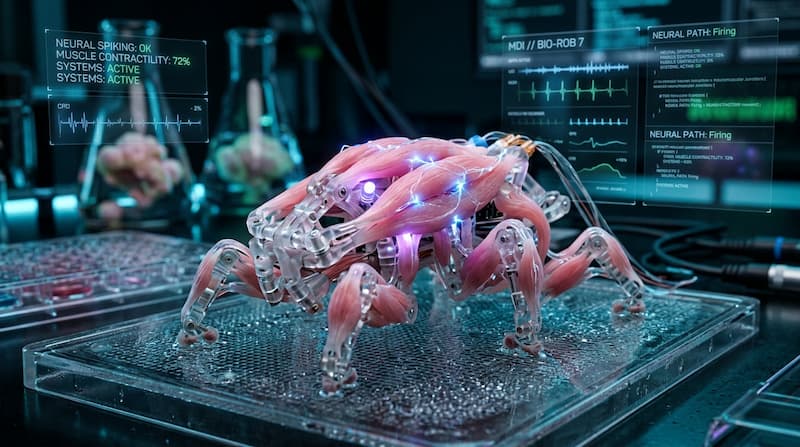
Researchers are building robots with living muscle actuators controlled by real neurons and organoids. These biohybrid machines crawl, swim, self-heal, and hint at truly adaptive intelligence beyond silicon.

Kenneth Shock can speak again — not with his mouth, but with his mind. Neuralink's VOICE trial marks a turning point in the story of the human biocomputer.
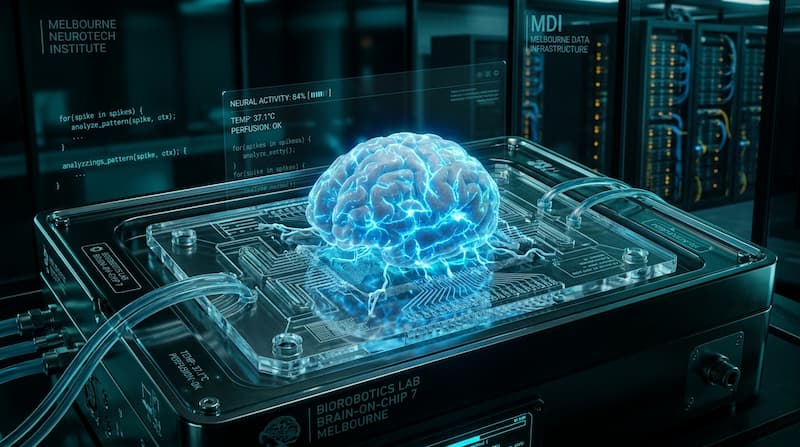
You can now buy a computer powered by living human brain cells or rent organoids in the cloud. We map the full 2026 landscape—from wetware processors to Neuralink trials and programmable cell therapies.

Before brain-computer interfaces existed, one neurophysiologist mapped the mind as programmable software. A deep dive into John C. Lilly's radical ideas — from Cold War classified research to the first isolation tank — and why they matter more than ever in 2026.

The real frontier of biocomputing isn't DNA — it's the proteome. Here's why intelligent organoids could crack the bottleneck and make drug discovery 100x faster.

Every year, hundreds of thousands of people are told their cancer has no known origin. For decades, medicine had no answer. Now, a deep-learning model trained on 57,000 cytology images may change that forever.

OmicClaw lets scientists run complex genomic analysis using plain English — no code required. Here's why that matters.

The Pentagon's research arm just announced O-CIRCUIT — a program to develop biological processing units that run on living neurons, consume almost no power, and could one day navigate drones using a sense of smell.