BIOCOMPUTER
Biocomputing BCI AI + Biology Synthetic Bio Medical About
Latest articles
AI Co-Scientists Are Now Doing Cancer Research — Not Just Analyzing It
ai-biology

AI Co-Scientists Are Now Doing Cancer Research — Not Just Analyzing It

Agentic AI has crossed a threshold in oncology — from pattern-recognition tool to active research collaborator that generates hypotheses, designs experiments, and guides lab workflows.
Read article →
AI Masters the Grammar of Bacterial Immunity — 2.39 Million Programmable Defense Systems Just Became Readable
ai-biology synthetic-programmable-biology

AI Masters the Grammar of Bacterial Immunity — 2.39 Million Programmable Defense Systems Just Became Readable

Transformers trained on 123 million bacterial proteins decoded the hidden computational language of antiphage defense. Mordret et al. (Science 2026) just tripled our estimate of genomic defense allocation and validated 12 brand-new systems. This is biology as computation entering its programmable era.

Read article →
DNA Origami Nanorobots: Programmable Molecular Biocomputers in the Bloodstream
synthetic-biology biocomputing

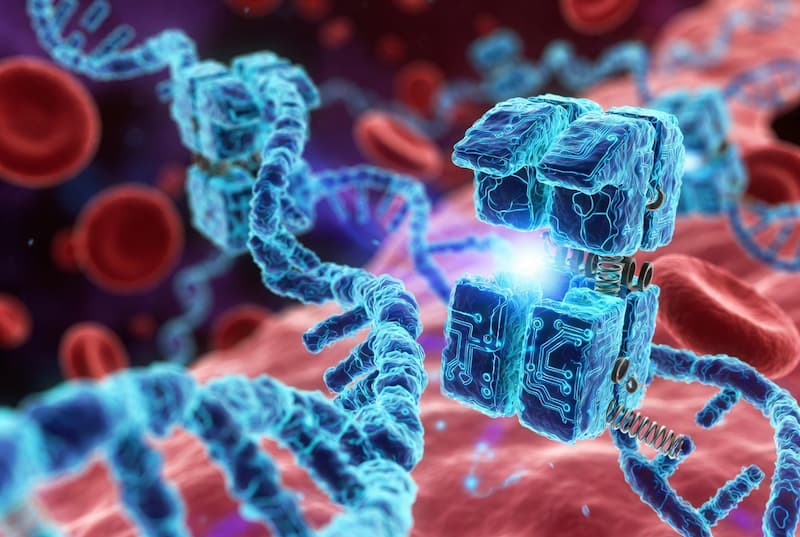
DNA Origami Nanorobots: Programmable Molecular Biocomputers in the Bloodstream

DNA is no longer just a storage molecule — it's the hardware for autonomous nanorobots that sense, compute, and act inside living systems. Here's what the 2025–2026 breakthroughs actually mean.

Read article →
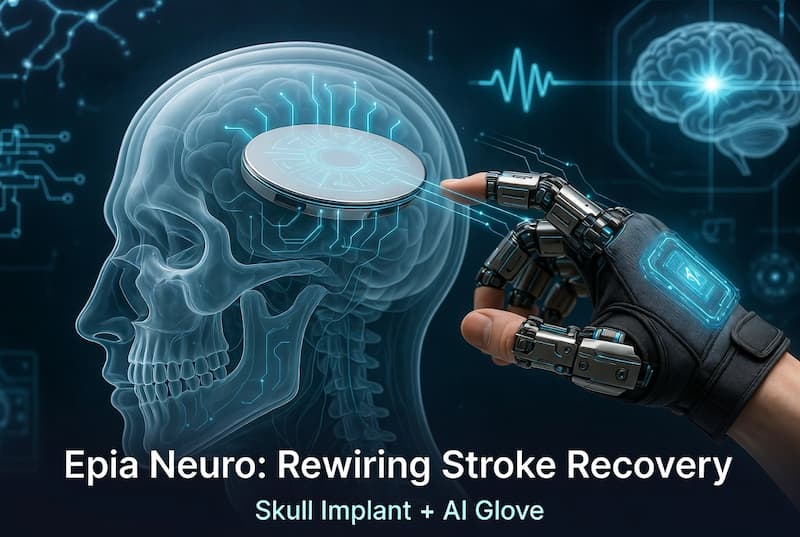
Epia Neuro's Skull Implant and AI Glove Want to Give Stroke Survivors Their Grip Back
bci

Epia Neuro's Skull Implant and AI Glove Want to Give Stroke Survivors Their Grip Back

Epia Neuro launched from stealth in April 2026 with a minimally invasive skull implant and motorized glove designed to restore hand function in stroke survivors — not by replacing the brain, but by retraining it.

Read article →
30 Million Cells, One Blueprint — Johns Hopkins Maps the Code of Human Thought
ai-biology

30 Million Cells, One Blueprint — Johns Hopkins Maps the Code of Human Thought

Johns Hopkins integrates nearly 200 studies and 30 million cells into a high-resolution atlas of neocortex development — turning raw biology into a programmable roadmap for the brain's computational assembly.

Read article →
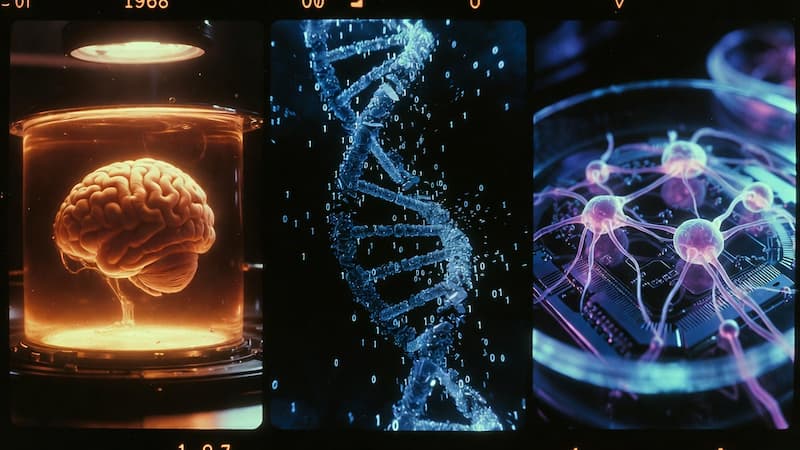
The History of Biocomputing: From Philosophical Wetware to Living Computers
biocomputing

The History of Biocomputing: From Philosophical Wetware to Living Computers

From John C. Lilly's 1968 vision of the brain as programmable hardware to Cortical Labs' $35,000 CL1, biocomputing has crossed from philosophy into product. Here's how we got here.

Read article →
Artificial Biological Intelligence: Writing Life from Scratch in the Post-Darwinian Era
synthetic-biology ai-biology

Artificial Biological Intelligence: Writing Life from Scratch in the Post-Darwinian Era

Evolution had 3.8 billion years. ABI gives us an afternoon. Adrian Woolfson and Eric Topol map the shift from reading DNA to authoring entire genomes — and what it means for biological computing.

Read article →
Neuromorphic vs. Wetware: Two Paths to Brain-Inspired Intelligence
biocomputing ai-biology

Neuromorphic vs. Wetware: Two Paths to Brain-Inspired Intelligence

Silicon that mimics the brain vs. neurons that are the brain. The neuromorphic and wetware paths diverge sharply — but their convergence may define the next era of intelligent machines.

Read article →
Fractal Minds and the Biocomputing Substrate: What Judah Anttila's TEDx Talk Gets Right About 2026–2045
ai-biology biocomputing bci

Fractal Minds and the Biocomputing Substrate: What Judah Anttila's TEDx Talk Gets Right About 2026–2045

Judah Anttila's TEDxOU talk maps the next 20 years of exponential change with rare emotional clarity. But the missing piece in his fractal mind thesis is the substrate — and wetware is already filling that gap.

Read article →
1 2 3 4 › »
BIOCOMPUTER

© 2026 BIOCOMPUTER. Independent coverage of biological computing, BCIs, synthetic biology, and the science of life as computation.